dev/spring boot + intelliJ
@ControllerAdvice 와 @RestControllerAdvice로 깔끔한 예외처리
dev_0hoon
2023. 12. 16. 15:53
@ControllerAdvice
@ControllerAdvice 는 대상으로 지정한 여러 컨트롤러에 @ExceptionHandler , @InitBinder 기능을 부여해주는 역할을 한다.
@ControllerAdvice 에 대상을 지정하지 않으면 모든 컨트롤러에 적용된다. (글로벌 적용)
@RestControllerAdvice 는 @ControllerAdvice 와 같고, @ResponseBody 가 추가되어 있다. @Controller , @RestController 의 차이와 같다.
이전 글에서는 특정 컨트롤러에서 @ExceptionHandler 어노테이션으로 예외를 처리를 했을 경우에
해당 컨트롤러의 안의 맵핑 된 주소가 있을 경우에만 예외처리가 되었다.
하지만 @ControllerAdvice 또는 @RestControllerAdvice를 어노테이션을 클래스 자체에 붙여 사용 할 경우, 모든 컨트롤러의 예외가 처리 된다.
package hello.exception.exhandler.advice;

import hello.exception.exception.UserException;
import hello.exception.exhandler.ErrorResult;
import lombok.extern.slf4j.Slf4j;
import org.springframework.http.HttpStatus;
import org.springframework.http.ResponseEntity;
import org.springframework.web.bind.annotation.ExceptionHandler;
import org.springframework.web.bind.annotation.ResponseStatus;
import org.springframework.web.bind.annotation.RestControllerAdvice;

@Slf4j
@RestControllerAdvice
public class ExControllerAdvice {

    @ResponseStatus(HttpStatus.BAD_REQUEST)
    @ExceptionHandler(IllegalArgumentException.class)
    public ErrorResult illegalExHandler(IllegalArgumentException e){
        log.error("[exceptionHandler] ex",e);
        return new ErrorResult("BAD", e.getMessage());
    }

    @ExceptionHandler //매개변수로 Exception을 두면 같은 것으로 인식하며 생략할 수 있다.
    public ResponseEntity<ErrorResult> userExHandler(UserException e){
        log.error("[exceptionHandler] ex", e);
        ErrorResult errorResult = new ErrorResult("User-EX", e.getMessage());
        return new ResponseEntity(errorResult, HttpStatus.BAD_REQUEST);
    }

    @ResponseStatus(HttpStatus.INTERNAL_SERVER_ERROR)
    @ExceptionHandler
    public ErrorResult exHandler(Exception e){
        log.error("[exceptionHandler] ex", e);
        return new ErrorResult("EX", "내부오류");
    }

}
이렇게 사용하면 다른 컨트롤러를 호출해서 예외가 터져도 아래처럼 처리가 된다.
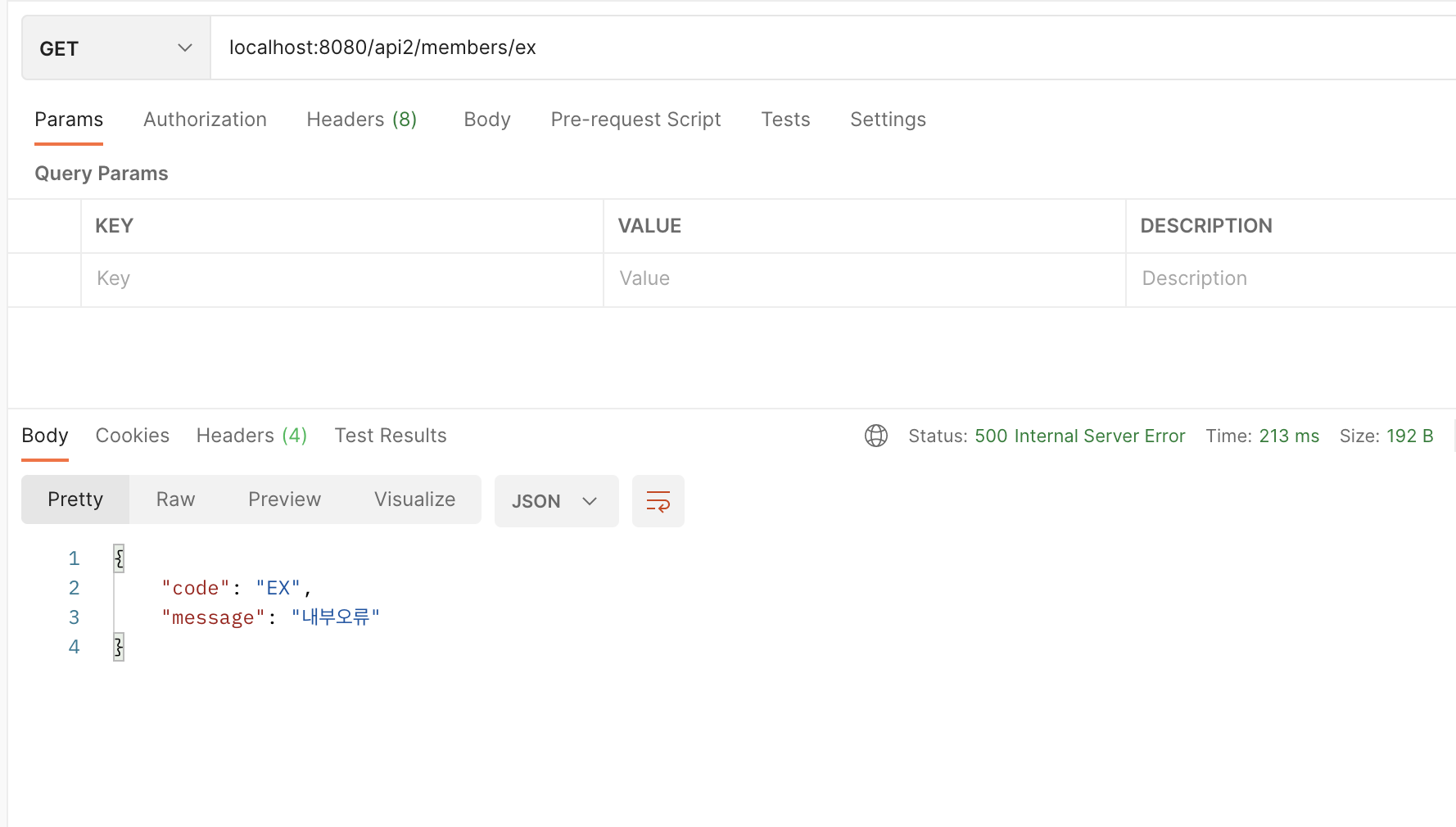
하지만 모든 맵핑주소에 같은 예외처리를 하고 싶지 않을 수 있다. 이럴 때에는 지정해 줄 수가 있다.
 // Target all Controllers annotated with @RestController
  @ControllerAdvice(annotations = RestController.class)
  public class ExampleAdvice1 {}
  // Target all Controllers within specific packages
  @ControllerAdvice("org.example.controllers")
  public class ExampleAdvice2 {}
  // Target all Controllers assignable to specific classes
  @ControllerAdvice(assignableTypes = {ControllerInterface.class,
  AbstractController.class})
  public class ExampleAdvice3 {}
이렇게 1. RestController만(@RestController) 지정도 가능 2. 패키지 단위로 가능하며 3. 직접 여러개의 컨트롤러로도(부모) 가능하다.
package hello.exception.exhandler.advice;

import hello.exception.exception.UserException;
import hello.exception.exhandler.ErrorResult;
import lombok.extern.slf4j.Slf4j;
import org.springframework.http.HttpStatus;
import org.springframework.http.ResponseEntity;
import org.springframework.web.bind.annotation.ExceptionHandler;
import org.springframework.web.bind.annotation.ResponseStatus;
import org.springframework.web.bind.annotation.RestControllerAdvice;

@Slf4j
@RestControllerAdvice(basePackages = "hello.exception.api")
public class ExControllerAdvice {

    @ResponseStatus(HttpStatus.BAD_REQUEST)
    @ExceptionHandler(IllegalArgumentException.class)
    public ErrorResult illegalExHandler(IllegalArgumentException e){
        log.error("[exceptionHandler] ex",e);
        return new ErrorResult("BAD", e.getMessage());
    }

    @ExceptionHandler //매개변수로 Exception을 두면 같은 것으로 인식하며 생략할 수 있다.
    public ResponseEntity<ErrorResult> userExHandler(UserException e){
        log.error("[exceptionHandler] ex", e);
        ErrorResult errorResult = new ErrorResult("User-EX", e.getMessage());
        return new ResponseEntity(errorResult, HttpStatus.BAD_REQUEST);
    }

    @ResponseStatus(HttpStatus.INTERNAL_SERVER_ERROR)
    @ExceptionHandler
    public ErrorResult exHandler(Exception e){
        log.error("[exceptionHandler] ex", e);
        return new ErrorResult("EX", "내부오류");
    }

}
간단히 패키지만 지정해 봤다.